활동소식

Nuclear Safety And Security Commission(NSASC)’s Financial Support for universities

2013.01.21

 The transition committee of the new government has been launched and one of
the most important issues is the nuclear power plants and nuclear power policies.
So we are currently looking at the previous records of the Nuclear Safety And
Security Commission (NSASC). The Center of Freedom of Information (CFOI) has
long been questioning problems. However, the NSASC, who were confident about
guaranteeing the security of the nuclear power through the transparency in the
disclosure of information, is still not revealing the list of the information they
have. Along with the frequently happening accidents in the power plants and bribery
scandal regarding their part suppliers, the NSASC was the institution that
received the lowest score in the institution evaluation last year. At the end
of 2012, the list of the information was requested to the NSASC and it was disclosed.


  While
looking at the list, we found a document named “Financial Support for
Universities”. Since we were curious about the document, we requested the
information disclosure to the NSASC. Below is the information provided by the
NSASC.


2011

Name of Uni.

Type

Projects Supporting Radiation Emergency Medical Center

Operation of Nation-wide Radiation Monitoring Centers

Development of Technologies on Radiation Safety

Total


Selection and Operation of Nation-wide Radiation Emergency Medical Centers
for the fast medical response to radiation emergencies and maintenance of the
national radiation emergency system

Regular monitoring of Nation-wide environmental radiation and

Securing data on background level

Development of Technologies on the Patient Dose Reduction for Radiation Remedies
and Treatment

Gangneung Wonju

National


57,960


57,960

Kangwon

National


63,376


63,376

Kyungpook

National

23,500

61,564


85,064

Gyeongsang

National

23,500


23,500

KyungHee

Private


59,764


59,764

Kunsan

National


63,376


63,376

Dongguk

Private

21,500


21,500

Pukyong

National


60,668


60,668

Pusan

National

23,500


23,500

Seoul

National

23,500


23,500

Andong

National


62,472


62,472

Ulsan

Private

23,500


200,000

223,500

Chonnam

National

23,500

59,765


83,265

Chonbuk

National

23,500


23,500

Cheju

National


62,472


62,472

Cheongju

Private


59,764


59,764

Chungnam

National

23,500

62,473


85,973

Chungbuk

National

23,500


23,500

Hanyang

Private


62,472


62,472

Total

233,000

736,126

200,000

1,169,126


2012

Name of Uni.

Type

Project of Supporting Radiation Emergency Medical Center

Operation of Nation-wide Radiation Monitoring Centers

Development of Technologies on Radiation Safety

Total


Selection and Operation of Nation-wide Radiation Emergency Medical Centers
for the fast medical response to radiation emergencies and maintenance of the
national radiation emergency system

Regular monitoring of Nation-wide environmental radiation and

Securing data on background level

Development of Technologies on the Patient Dose Reduction for Radiation Remedies
and Treatment

Gangneung Wonju

National


65,000


65,000

Kangwon

National


65,000


65,000

Kyungpook

National

27,000

65,000


92,000

Gyeongsang

National

57,000


57,000

KyungHee

Private


65,000


65,000

Gunsan

National


65,000


65,000

Dongguk

Private

25,000


25,000

Pukyong

National


65,000


65,000

Pusan

National

27,000


27,000

Seoul

National

27,000


27,000

Andong

National


65,000


65,000

Ulsan

Private

27,000


200,000

227,000

Chonnam

National

60,000

65,000


125,000

Chonbuk

National

42,000


42,000

Cheju

National


65,000


65,000

Cheongju

Private


65,000


65,000

Chungnam

National

57,000

65,000


122,000

Chungbuk

National

27,000


27,000

Hanyang

Private


65,000


65,000

UNIST

National


32,500


32,500

Total


376,000

812,500

200,000

1,388,500

  Supporting
universities is allegedly a project that the Ministry of Education, Science,
and Technology used to engage in, even before the launch of the NSASC. This
project supports radiation emergency centers, operates radiation monitoring
centers, and provides financial aid for the purpose of developing technologies
on the radiation safety. The NSASC supported 19 universities with 1.17 billion
won grants in 2011 and 20 universities with 1.39 billion won grants in 2012.
Among these 20 universities, Ulsan University was the largest beneficiary of
the NSASC’s financial support, which received 220 million won for 2 years.


  Looking
at the list of the information arouses our curiosity. We will carefully go
through the every element of the disclosed information and request the information
disclosure accordingly. You can find the file disclosed by the NSASC as below. Being
the worst in the institution evaluation of the government ministries and endlessly
occurring problems in the nuclear power industries… the NSASC is at the
center of such issues. Let’s monitor the NSASC together and make the commission
transparent.


원자력안전위원회_정보목록.egg


by
  • 정보공개센터

정보공개센터는 정부지원 0%, 시민의 후원으로 활동합니다

후원하기
활동소식

Solutions from Dutch University Education

2013.01.17

By
Jiyoung Shin


  It has been 3 years
since I started my university life in Holland after graduating from high school.
Thinking that I haven’t had any opportunities to experience Korean
universities, I applied for a Korean university for my student exchange
program. I would like to talk about a few things I realized in comparison to Holland
while spending the 2012 Fall semester as a university student in Korea.


  First of all, there
was a tremendous difference on tuition fees. In Holland, the government sets
the statutory tuition fee each year and therefore there is a fixed amount that
Dutch universities can request to students. Although non-EU students have to
pay far more, the tuition fee for Dutch and EU students has been set at
  1771 (approximately 2,500,000 won)
this year. 10 month installments are also possible. The website of the Korean university
that I studied this semester as an exchange student states that the tuition fee
is 3,400,000 won per semester. This means that the Korean students are paying the
tuition fee that is 2.7 times higher than that of Dutch students.


  In Holland, a
considerate number of students juggle their studies with work just like it is
in Korea. Although Dutch people have to pay maximum 52% of their income as tax,
they got a nice welfare system. The Dutch students are able to use the public
transportation for free during the week days and receive monthly subsidies from
the government. So there are many students who make living expenses and rent
fees without getting help from their parents.


The class also differs between two
countries. Mostly, the students in Holland have smaller options for selecting
their own courses since the required courses per term usually fixed. Only
seeing at the number of available courses make the Korean students appear to
have a broader option for selecting their own courses. But I realized
throughout the course registration period that it is not so good as it looks.
One second was enough. In case of failure to a fast-click, you have to bear the
pain of sitting in an unwanted course for 4 months.


  The difference also
exists in the class style. At my university, Erasmus University Rotterdam, the
class per one course is usually divided into the lecture and tutorial. In the
lecture, the professor explains the academic concepts and conveys relevant
knowledge to the entire students. On the other hand, the tutorial is a small
class of 15 to 20 students where the discussion and presentation based on the
lecture take the central role. Most of students consider tutorials rather
boring compared to lectures. Therefore, the professors spend endless pains on
making lectures more interesting and interactive.


  In Korea, however, I
got an impression that the class style is more standardized. The student
participation has been increased by the discussion and presentation. But the
structure of the class did not depart from the standardized lecture-presentation-discussion
pattern. In particular, the courses taught in English brought upon more frustrations.
The class proceeded without any questions nor answers because of the
uncomfortableness in English. Although English courses are vital for the
internationalization of the university, it made me question whether they are
really necessary even when the stress is increased and communication is
prevented.


  Having watched the
Korean students, I can confidently say that they are unbeatable in terms of the
diligence. In the courses taught in Korean, which has no language barrier, I
often saw students who had already read others’ presentation paper at home and prepared
questions in advance. When I told this story to other foreign exchange students
living in the same dormitory as me, they all gave their thumbs up for the
thorough preparation of Korean students. But Korean students seemed extremely busy
and tired, more than anyone else. Soaring tuition fees, stresses with foreign
languages and worries on finding a job…. What they need now is a change in the
university education instead of healing.


This article has also been published in <왜냐면> of Hankyorae newspaper.


by
  • 정보공개센터

정보공개센터는 정부지원 0%, 시민의 후원으로 활동합니다

후원하기
활동소식

What are the Problems of Public Duty Personnel System?

2013.01.17


By Seonghyun Jang


The public duty personnel system
was introduced after the abolishment of the previous alternative military
service system in 1995. The public duty personnel service is a system that
makes people who turned out to be not appropriate for serving active duty by a
conscription examination to do an alternative service instead of being on
active duty. In other words, the public duty personnel system was introduced in
order to treat people judged unfit for the military service equally with
others, not because of a pure necessity for the alternative duty. Due to this,
the supervision of public duty personnel service is very weak. Therefore, CFOI analyzed
the proposal for improving the supervision of public duty personnel system in
order to find out how Anti-Corruption & Civil Rights Commission of Korea
took action on this issue.


   First of all, the clause on
enhancing the supervision of public duty personnel was mentioned to restrict
the personnel’s unpunctuality, additional jobs, education activities; entering
university, getting a degree and as it is consistently shown on the press, the
commission of crimes.


Cases of the public duty personnel’s degradation of working discipline

(Investigated by Anti-Corruption & Civil Rights Commission of Korea)


 • Kim ○○, a public duty worker at ○○ district office, was supposed to be discharged from his duty on May 13th, 2012. But it was found that he took the university entrance exam (performance test) in November, 2011 and entered ○○ University of Art on March 2nd, 2012. He kept his name on the register of the university without informing the district office nor Military Manpower Office. This has been pointed out as doing educational activities while on the alternative duty.

• Min ○○, who works at the ○○ Child Center, is constantly late (20~40 minutes) in the morning. The supervisor at the child center asked him several times to be on time but it didn’t make any difference. So this has been reported to the person in charge of the supervision in ○○ city.


• ○○ Gu (working office) has issued warnings to 14 people absent at the quarterly working and basic quality education for the public duty personnel and 8 latecomers caught at the sudden inspection.


  As
a more well-known case to the public, PSY has been criticized for participating
in more than 50 events and activities while serving as the industrial technology personnel.
In addition to this, Shin Seong-rok, an actor who worked at a child library through
public duty personnel system, once got in a trouble for lying down on his job.


  In order to prevent things above,
Anti-Corruption & Civil Rights Commission of Korea recommended Military
Manpower Office to make regulations and establish the minimum guideline on the
public duty personnel service. An electronic time card was also suggested to
enhance the supervision on duties. The electronic time card won’t be a burden
as it only cost 500,000 won for administrating 4-500 people.


http://blog.daum.net/mma9090/5522

  The fact that the public duty personnel are negligent on their duties is
not only the problem of the public duty personnel. It is because the
institutions that have the public duty personnel are negligent on supervising
them. The government is operating a military service supervision portal to oversee
the public duty personnel. However, the institutions are not utilizing it properly.
Public officers who are in charge of the public duty personnel have to write
down the working status of their personnel every day. But they often skip writing
for a long time or in many cases, they do not write it at all. Due to this, trainings
and consultations through the portal is not working as well.

< Status of action on weak supervision and dereliction of duty (Unit:
person)>

Total

Working
Office

Public
Duty Personnel

Total

Accusation

Castigation

Warning

Caution

Rectification

Total

Accusation

Warning

Caution

2012.9

628

524

1


125

278

120

104


98

6

2011

913

789


186

334

269

124


124


In order to solve this problem, Anti-Corruption & Civil Rights
Commission of Korea recommended to specify in concrete the reasons of disciplinary
punishment and to let the public duty personnel know accurately what kinds of
behavior are not allowed. As for social welfare facilities, the punishment is
not effective. Therefore, in this case, Anti-Corruption & Civil Rights
Commission recommended to cancel assigning people and to relocate them.


 The Military Service Supervision Portal is a system that enables the online notification of personal information transfers between the working office and MMA, application of working status and checking its results, investigation on the supervisors’ administration and supervision, previous notification, notification and result of education. It is only accessible to people with a certificate,

Lastly, there is the enhancement of restriction on people working at social
welfare facilities. The people judged unfit for the military service because of
their mental disease or sex crime records are not allowed to work at social welfare
facilities (orphanage, nursery school, nursing home). However, it was revealed
by the inspection of the
 Board of Audit and Inspection that these people can also work at the aforementioned facilities
when applying their working places online. Therefore, Anti-Corruption &
Civil Rights Commission of Korea recommended them to clearly state themselves
as a person with restricted selection.
 

  Negative report on the operation of the restriction system on working institutions (The Board of Audit and Inspection, 2012.6)

Only after 2010.3.15, there are 36 assigned to the reservist duty due to the mental illness and 12 others assigned to the reservist duty due to the imprisonment who all are currently working at the facilities for the infant, child, disabled and seniors (○○ local MMA etc.)

   The public duty personnel service is
a system that can arouse a huge criticism from citizens when it is not properly
supervised.  If the public duty personnel neglect their job, a strong
criticism can be raised concerning the fairness with the people on active duty
and the weak supervision may produce numerous victims under the current
situation in which more than 50 thousands of public duty personnel are present.
Taking this in their mind, the government needs to reorganize the system as
soon as possible.


by
  • 정보공개센터

정보공개센터는 정부지원 0%, 시민의 후원으로 활동합니다

후원하기
활동소식

Presidential Committee on “Green Growth” or Presidential Committee on “Negotiated Contracts”?

2013.01.17


  There is an organization called the Presidential Committee on Green Growth
(PCGG). It is a commission made after the inauguration of Lee Myung-Bak’s
administration. It is also a place enthusiastic about keeping both “Green” and
“Development”. But you might be surprised to see the budget plan of
the Steering Committee of the
National Assembly.


 There are some interesting
statistics in the 2010 Status of the PCGG research (p.56 of the
attached report). In total, 1.99 billion won of the entire research budget, 2
billion, was used. Surprisingly, everything turned out to be negotiated
contracts excluding the competition and 64 billion won.


Status of the PCGG research


[2010 Status of the research]


(unit : 1000won)


Subject


Budget


Used


Contract Period


Contract Form


Contract institution


1


Research on the evaluation and selection of EcoRich
cities


50,000


50,000


’10.04.06


 ’11.01.05


Negotiation


The Korea Land & Housing Corporation


2


Research on the government functions and organizations
in the era of bigger Korea and green development


30,000


30,000


’10.05.19


 ’10.08.18


Negotiation


SNU R&DB Foundation


3


The operation of Green Korean peninsula Forum


49,000


49,000


’10.06.03


 ’11.01.25


Negotiation


Korea Institute for National Unification


4


Project research on the conditions of Korean
Peninsula’s Green development


50,000


49,500


’10.06.03


 ’10.10.25


Negotiation


Korea Environment Institute


5


Establishment of the direction and development
strategies of Green technology R&D investment distribution


760,000


760,000


’10.06.03’10.12.31


Negotiation


Korea Institute of S&T Evaluation and Planning


6


A comparative analysis of EU Climate Change Policies
and Green Development Policies of Korea


10,000


10,000


’10.06.25


 ’10.09.27


 Negotiation


Korea Legislation Research Institute


7


Research on the 
prospect of the greenhouse gas exhaustion and establishment of Reduction
Target system by sector


298,,000


297,000


’10.07.21’11.5.31


Negotiation


Yonsei University Office of Research Affairs and
University-Industry Foundation (UIF)


8


Study on the selection and preparation of subjects of a
policy consideration in relation to greenhouse gas reduction policies


197,000


195,800


’10.07.22


 ’11.02.28


Negotiation


Korea Energy Economics Institute


9


Support in the establishment of execution plans by
sector regarding adaption to the climate change


50,000


49,000


’10.09.13


 ’11.04.09


Negotiation


Korea Environment Institute


10


Development of urban agriculture through a comparative analysis
on laws in urban agriculture


30,000


30,000


’10.10.1’10.12.31


Negotiation


Daeryook Aju


11


Collaborative study on Green Banking  at an APEC level


90,000


90,000


’10.10.01


 ’10.12.15


Negotiation


Dankook Industry Academic Cooperation Foundation


12


A Study on the improvement of policies
of energy demand administration


90,000


88,000


’10.10.06


 ’11.02.05


Negotiation


JJ-Industry Cooperation Foundation


13


Research on development strategies of Korean peninsula’s
Green Growth


50,000


49,800


’10.10.15


 ’11.03.14


Negotiation


Korea Environment Institute


14


International case studies of small and medium sized
companies in the Renewable Energy sector


38,000


37,347


’10.10.18


 ’11.01.17


Negotiation


Beacon Consulting


15


The direction and strategies of Green Development in
developing countries – for the development of OECD Green Growth Strategies


50,000


49,800


’10.10.28


 ’11.2.28


Negotiation


Korea Environment Institute


16


Regulation reform for the green
growth and climate change


20,000


20,000


’10.11.02


 ’10.12.01


Negotiation


Korea Legislation Research Institute


17


Analysis of the international,
political, economic influence and implication of hosting COP


50,000


49,900


’10.12.17


 ’11.3.16


Negotiation


SNU R&DB Foundation


18


Research on the
internationalization of National Green Technology Award


40,000


40,000


’10.12.06


 ’11.3.5


Negotiation


Technovalue


19


Plans on enhancing the competitiveness
of human resource in small and medium sized green companies


28,000


27,100


’10.12.27


 ’11.6.24


Competition


Alpha Solution Consulting


20


Analysis of causes and improvement
plans for the mismatching employment of small and medium sized green
companies in local areas


20,000


20,000


’10.12.24


 ’11.3.23


Negotiation


Hoseo Institutions of Industry-Academic Cooperation
Foundation


Total


2,000,000


1,992,247


A 760 million won worth project, “Establishment of the
direction and development strategies of Green technology R&D investment
distribution”, has been made into a negotiated
contract with
Korea Institute of
S&T Evaluation and Planning. (Korea Institute of S&T Evaluation and
Planning has conducted research on the R&D of Green Technology. The research
has been conducted with segmented themes such as 27 Important Green Technology,
4 Focus Areas (Energy, Preservation of Environment, High efficiency of energy,
Greenization of Industrial Spaces) along with the “Analysis of the 2010
National R&D Project of Green Technology”


PCGG one again signs the negotiated contract with Korea Institute of S&T Evaluation and
Planning for a same project in 2011.


  A 297 million won worth negotiated
contract was made for the “Research on the prospect of the greenhouse gas
exhaustion and establishment of reduction target system by sector”. This seems
enough to call this committee the Presidential Committee on “Negotiated
Contracts” instead of “Green Growth”. Who would believe that the contracts were
fair when more than 90% is negotiated contracts?


  Fortunately, it
dramatically decreased in 2011 and 2012. What happened in 2010?


  The negotiated contract is a system that
needs to be avoided in order to prevent corruption. Due to this, every
organization is trying to avoid negotiated contracts as much as possible.
Although the achievement of the PCGG has to be discussed at a later date, such
forms of contracts appear to be very inappropriate. More effort should be made
not to repeat the past.


  You can find the
entire data below.


1902047_정무위원회_예비심사검토보고서.hwp


by
  • 정보공개센터

정보공개센터는 정부지원 0%, 시민의 후원으로 활동합니다

후원하기
활동소식

An old, poor and self-murdering Society. There is no South Korea for the old.

2013.01.16

No. 1 among
Organization for Economic Cooperation and
Development
(OECD) countries.


No.1 in aging population, No.1 in
elderly poverty rate, No.1 in elderly suicide rate


By Jiyeon Shin, Voluntary Activist


 We are only in the beginning of the New Year but “Dying
alone”, “Korean working population’s average age will be 50 in 2045” and
“elderly suicide rate” are the news shown by TV. It is a gloomy news that the
elderly population will exceed the working population in 30 years and the
potential growth rate will decline within 10 years.


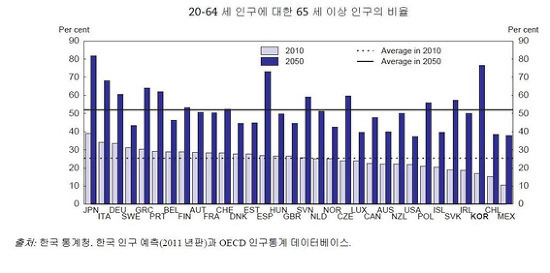
  The ratio of aging population
in Korea was already 24.46% in Fall 1995 which exceeds the world average of
19.1%. After becoming an aging society in 2000, the reported figures were 41.3% in
2003, 44.1% in 2004, 47.3% in 2005, 51.0% in 2006, 55.1% in 2007, 59.3% in
2008, 63.6% in 2009, 67.7% in 2010, 72.4% in 2011 and 77.7% in 2012 and
moreover, Korea is predicted to become an aged society by 2019 and super-aging
society by 2026. On the contrary to Japan which is expected to take 36 years to
become a super-aging society, Korea is expected to take approximately 27 years.


  The problem of the elderly suicide rate is even severe. Such
an unexpected figure motivated me to write this article. Donghyeon Kim, a
professor at the Social Medicine Department of Hallym University College of
Medicine, pointed out the problem through Hankyorae newspaper as below.


  “In other countries, the
suicide rate is high in 10~30s which usually decreases when they become old. If
it increases, it only increases slightly. However, the suicide rate of Korea
constantly increases from teens and when the age reaches 65 the increase rate
becomes so high that the rate is not even comparable to other age groups. In
the age group between 10s and 30s, the suicide rate is lower than Norway and Italia.
In other countries, the suicide rate after 60s is 20~40 per 100,000 people.
However, it far exceeds 100 in Korea. After the age of 75, it even exceeds 160.
Japan, our neighbor country, shows a peak in the suicide rate among the mid 40s
but the rate decreases afterwards. This shows that Korea has reached an
unbeatable position in the field of the elderly suicide.”


  What are the causes of such a high
elderly suicide rate? The first is poverty and there can also be others such as
conflict in family, loneliness, poor measures of the government and diseases
such as depression, cancer and dementia.


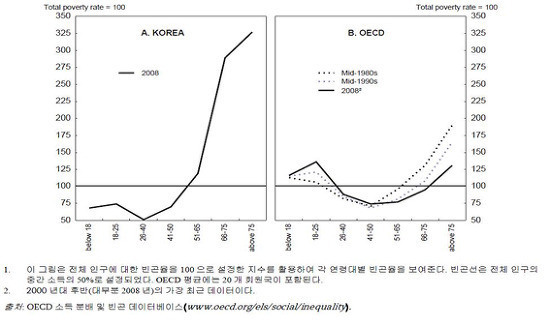
 Currently Korea is under a very severe condition that the
half of elderly population is poor and the elderly poverty rate amounts to
45.1, which is three times the OECD average of 13.5.


  The Ministry of Health and Welfare legislated laws for the
welfare of the elderly in 2007 in order to enhance their health and welfare.
The Ministry is making effort to establish and operate specialized institutions
for creating jobs for seniors, support professions, promote elderly discount,
support old people living alone and establish welfare organizations for the
elderly. But it is doubtful whether the political and administrative support of
the nation and local governments are meeting the required standard.


   The dependent
senior population is increasing while economically active people are decreasing
in accordance with the trend of low birth rate and aging population which
results in a rapid increase in the sustenance allowance and medical expenses of
seniors. This also becomes a burden to the next generation. Thus, supporting
old people should be understood as a shared responsibility of the country,
society and family. The government has been reluctant to enhance the welfare
probably due to the impediment of the economic development and increase in the
tax burden.


   Park Geun-hye, a
president-elect, said “It is an obvious responsibility of the nation to
guarantee happy lives of the elderly.” and emphasized that “the country will do
its best”. “As Korea entered the aging society, how to spend the time happy and
satisfactory at old ages has become a national task”. She continued “the
foundation of policies is to support the elderly to live comfortably without worries”
and suggested elderly welfare policies such as
  introduction of basic pension  Increase in job opportunities  100% financial support on 4 serious
illness
  Reduction on implant expenses  Provision of long-term care insurance
for seniors with dementia and physical disabilities
  Provision of long term care insurance
for seniors living alone and the disabled in the second highest level


  It is likely that quite a
number of people over 50 actively supported Park because of these types of
dream-like-policies. It is true that only looking at these policies make us
think South Korea can be a country for the elderly. From now on, we should keep
our eyes on how the Park’s welfare of the elderly is realized and what kinds of
policies are prepared for the poor seniors.


  We hope
user-centered-welfare policies are carried out for the elderly and the dishonor
of being No.1 in aging population, elderly poverty rate and suicide
rate to be removed.


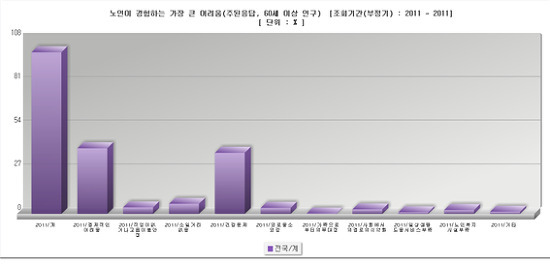
Attached files are the data
provided by Statistics Korea.


노인(65세_이상)의_일반특성별_자살생각_이유_및_시도_(연도).xls


노인이_경험하는_가장_큰_어려움(주된응답,_60세_이상_인구).xls


by
  • 정보공개센터

정보공개센터는 정부지원 0%, 시민의 후원으로 활동합니다

후원하기
활동소식

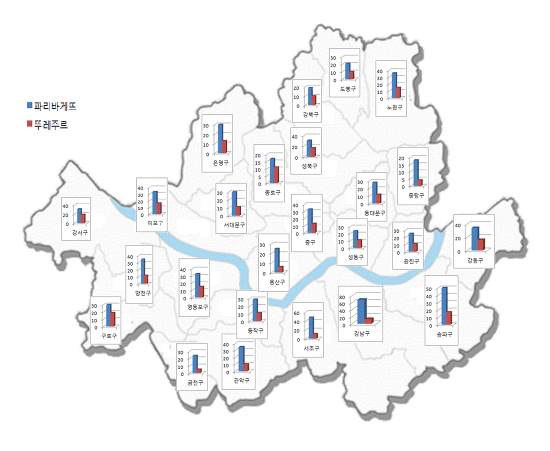
More than 200 coffee branches in Gangnam… but only 6 in Dobong

2013.01.14

By Jang Seong-hyun
(voluntary activist)


    While
self-employed businesses are rapidly dwindling, big franchise brands have grown
substantially in recent years. Under the current situation in which running a
business with small mom and pop stores became extremely difficult, I have
conducted research on the number of coffee and bakery branches of big franchise
brands. (Research period: December 12)


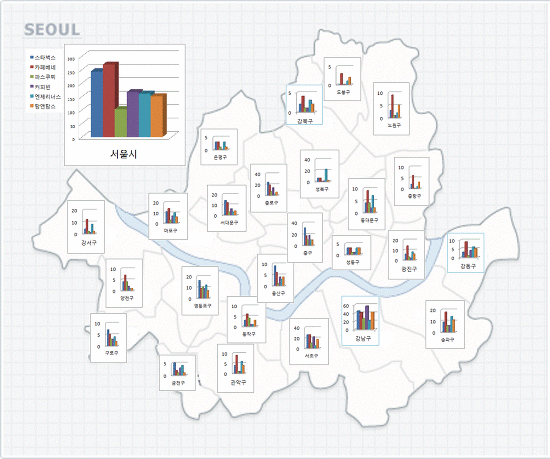
  The coffee brands that have been
investigated include Starbucks, Caffebene, Pascucci, Angel-in-us and Tom N
Toms. The number of branches these six brands have in Seoul amount to 1100.
Starbucks and Caffebene have around 250 branches, which is the highest number
among all. Other brands have approximately 100 branches.


스타벅스

카페베네

파스쿠찌

커피빈

엔제리너스

탐앤탐스

총계

강남구

45

41

26

57

22

42

233

강동구

3

9

1

4

6

5

28

강북구

2

4

1

1

3

2

13

강서구

4

12

2

1

8

2

29

관악구

4

9

1

1

6

4

25

광진구

6

14

3

2

8

6

39

구로구

7

5

3

3

4

2

24

금천구

5

2

1

3

4

1

16

노원구

3

9

1

1

2

5

21

도봉구

0

3

0

0

1

2

6

동대문구

4

9

4

2

7

2

28

동작구

3

6

4

1

1

3

18

마포구

11

14

3

7

10

6

51

서대문구

14

12

3

6

3

4

42

서초구

26

26

10

22

5

17

106

성동구

3

3

1

1

3

3

14

성북구

6

6

0

1

22

2

37

송파구

9

18

6

6

14

11

64

양천구

4

7

4

2

1

1

19

영등포구

16

9

10

9

12

7

63

용산구

9

6

1

4

3

4

27

은평구

3

3

1

0

3

1

11

종로구

24

19

7

14

2

6

72

중구

31

17

10

18

10

10

96

중랑구

2

6

0

0

1

3

12

총 계

244

269

103

166

161

151

1094


For coffee branches, all brands in
common have their branches concentrated in Gangnam district and central Seoul,
which are business areas. The number of the branches located in the Gangnam district
(Gangnam, Seocho, Songpa) and central Seoul (Jongro-gu, Jung-gu) is 571, which
exceeds the half of the entire number of branches in Seoul. In comparison,
there is no brand that has more than 5 branches in suburban districts such as
Eunpyeong, Gangbuk and Nowon. Considering the fact that coffee had gone beyond
a favorite-food and became a cultural code that only limited people with a certain level
of spending power can purchase, the distribution of franchise coffee branches
can be an indicator that reveals a gap between the rich and poor.


파리

바게뜨

뚜레

주르

크라운

베이커리

신세계 svn

총계

데이앤

데이

달로

와요

밀크앤

허니

메나쥬리

베키아

네 누보

패이

야드

신세계

총계

강남구

68

13

2

1

1

1

1

3


7

90

강동구

34

16

1

2


2

53

강북구

19

10

0


0

29

강서구

31

19

1

2


2

53

관악구

35

10

0


0

45

광진구

25

11

0


1


1

37

구로구

30

19

1


1


1

51

금천구

24

5

1


0

30

노원구

36

15

1

1


1

53

도봉구

21

10

1

1


1

33

동대문구

28

12

0

1


1

41

동작구

29

11

0


0

40

마포구

33

16

0


1


1

50

서대문구

30

11

0


0

41

서초구

48

11

3


1

1


1


3

65

성동구

24

11

0

2


2

37

성북구

31

17

1

1


1


2

51

송파구

50

17

1


1


1

69

양천구

35

12

0

2


2

49

영등포구

33

15

3

2

1

1


4

55

용산구

25

6

0


1


1

32

은평구

30

13

0

2


2

45

종로구

17

11

3


0

31

중구

33

13

0

1

1


1

1

4

50

중랑구

18

4

0

2


2

24

총 계

787

308

19

20

4

9

1

5

1

40

1154


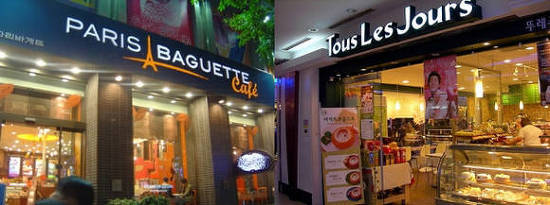
 In comparison, bakeries have less
unequal distribution among regions since bread is not affected by whether it is
residential area or business district. However, the oligopoly of certain brands
are even severe. Paris Baguette has 800 branches in Seoul while Tous les Jours,
the nation’s No. 2 bakery chain, has less than half, which is 300.


 Shinsegae SVN has consistency
expanded its business by segmenting its bakery brand into 6 different brands
such as dayandday and Dalloyau even when there was a huge dispute over bakeries
owned by conglomerates. The number of stores owned by Shinsegae in Seoul is 40
which is even higher than that of Crown Bakery, which has been in business
since 1988. Moreover, Shinsegae is expanding its business by establishing
stores inside E-mart which also belongs to Shinsegae, a retail conglomerate.


  After the introduction of “Tongkeun Chicken”, the regulation on big
franchises and preservation of small retailers became an issue in our society.
Concerning this issue, big franchises have expressed opposition to anti-market
policies that restricts the free market competition. However, a fair
competition cannot be present under the current situation in which big
franchises and conglomerates compete with small retailers with their high brand
awareness and financial abilities.


Before the big franchises and conglomerates entered into the areas of
mom-and-pop stores, local retailers formed a commercial power which prevented
from the wealth being concentrated to the center and evenly distributed the
benefits of stimulated economy. However, under the current circumstances in
which the big franchises are dominating the market, mom-and-pop stores and the
local economy are rapidly declining as the wealth in the region is
concentrated in the center through franchise branches instead of local
retailers. In this case, the government should be actively involved in
protecting small retailers through regulation on big franchises. It is because
only this can guarantee a healthy economic structure where the benefits are
equally distributed to every citizen in Korea.


by
  • 정보공개센터

정보공개센터는 정부지원 0%, 시민의 후원으로 활동합니다

후원하기
활동소식

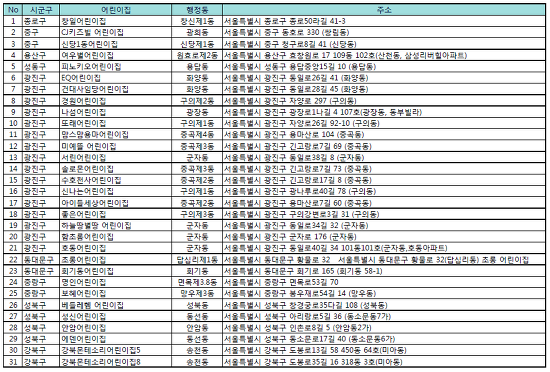
105 kindergartens in Seoul operates 24 hours a day, would this help working parents with childcare?

2013.01.10

Local governments are establishing
24-hour-kindergartens. In Seoul, five are in operation since last year and
Gyeonggi-do is also planning to expand their facilities.


Apart
from the ones supported by the local governments, there seems to be a lot of
24-hour-kindergartens due to the increasing amount of two-career families.


We
requested information concerning the number of 24-hour-kindergartens in Seoul. According
to the data provided by Seoul, there are 105 kindergartens in Seoul that
operates 24 hours a day.


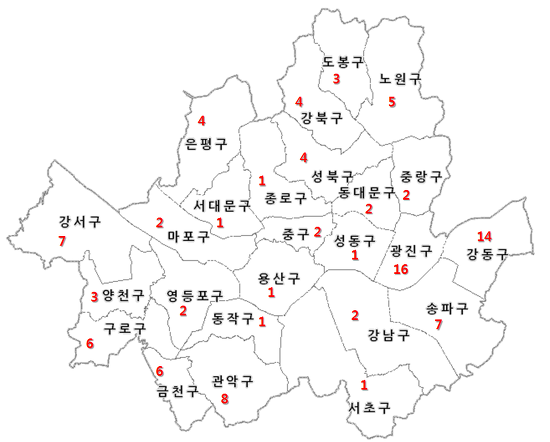
Among 25 districts of Seoul,
Gwangjin-gu has the highest number with 16 kindergartens followed by
Gangdong-gu which has 14. Seodaemun-gu, Dongjak-gu, Seocho-gu, Seongdong-gu,
Yongsan-gu and Jongro-gu each has only one kindergarten that opens 24 hours a
day.


If you think about it, you will
realize how sad this is. The kids sent to the kindergartens are only 5 years
old or so. But they have to stay till late or the whole night in the
kindergarten because of their working parents. The parents who have to send
their kids to the 24-hour-kindergartens will never feel at ease as well. Having
searched on the internet, however, the working parents seem to welcome
24-hour-kindergartens. There are also some opinions that the government and
municipalities should increase support. This proves that childcare is difficult.


Raising children in Korea is no
easy task. It is almost impossible to make a living without working together,
but working together arouses problem with child care. There’s no person or
facilities that can take care of kids till late. Probably that’s why
24-hour-kindergartens started to appear and the local governments provide
support.


For
the parents in difficult situations, 24-hour-kindergartens will definitely be
an option. However we have to be aware that this can only be one of the support
policies, not solutions. The problem with child care will not be solved without
an improvement in the working condition and the secured employment where you
can freely take parental leave.


Attached is the file provided by Seoul. Please refer to the
file for the entire data.


24시간_어린이집.pdf


by
  • 정보공개센터

정보공개센터는 정부지원 0%, 시민의 후원으로 활동합니다

후원하기
활동소식

Polarization of income spreads to education, Gangnam-gu has 19 times as many English kindergartens as Geumcheon-gu in Seoul

2013.01.09


CFOI (Center for Freedom of
Information) requested information to 11 district offices of Education in Seoul
concerning English kindergartens in each district.


  The English kindergartens that we hear from
the press generally refer to the institutes that teach English to kids. Each
district office of Education disclosed information regarding the institutes
engaged in English education for children


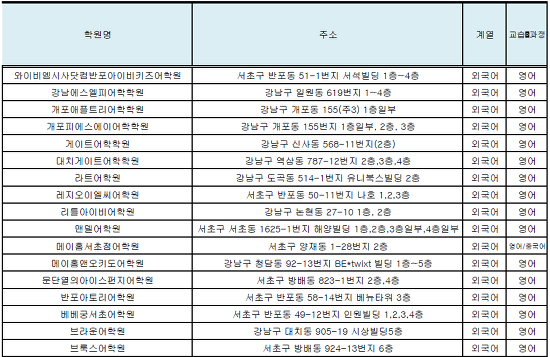
<Part
of the information provided by Gangnam district office of Education>


  According
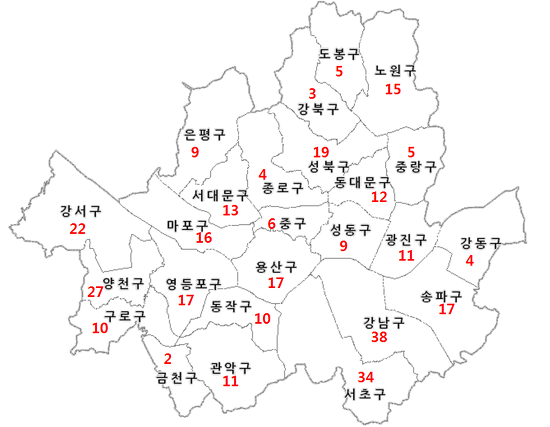
to the data, Seoul has 336 English kindergartens in operation. Among them,
Gangnam-gu has the highest number of English kindergartens in operation which
is 336. The second highest is Seocho-gu with 34 English kindergartens. The
third is Yangcheon-gu, in which Mokdong is located, with 27 English
kindergartens. In comparison, Geumcheon-gu has only 2 English kindergartens
which is the lowest number in Seoul. Gangbuk-gu has 3 and Gangdong-gu and
Jongro-gu have 4 each.


  According to the “information system
of institutes in our town” offered by Seoul Metropolitan Office of Education,
the monthly tuition fee of one English kindergarten in Gangnam-gu is 1.49
million won. This amounts to 18 million won a year. Slight differences exist
among kindergartens, but there are several tens of English kindergartens whose
tuition exceeds 10 million won a year. The minimum living expense for a 4
person family was set as 1,495,550 won in 2012. One month tuition fee of a
5-year-old kid can be the monthly living expense for one family.


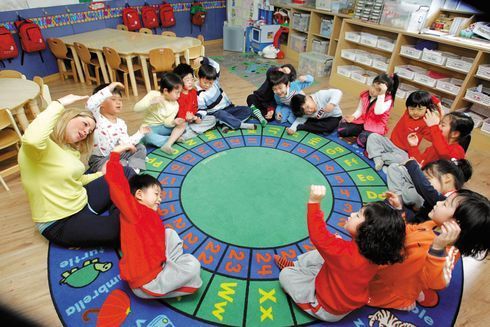
  (This image is not relevant to
the kindergartens mentioned above)


  The
polarization is worsening in our society. The Middle class is on decrease and
disparities in income and wealth are widening. Such income disparities result
in the polarization of education.


  The
classic “rags to riches” story is gone. The presenting education divide clearly
distinguishes the life of rags and riches from a young age. The reality shows
that the riches only come from Gangnam.


  Differences
on the income and education can exist. However, the differences should not be
the wall that never can be torn down. A solution for the polarization of
education is desperately needed.


  Below
you can find the data extracted from the <Institutes information> of Seoul
Metropolitan Office of Education and information disclosed by each district
office of Education.


The information
related to Seoul Metropolitan Office of Education was extracted from “
학원종류: 학교교과교습학원  분야구분: 국제화  교습과목: 유아 검색


영어유치원_교육지원청_자료_취합.zip


영어유치원_학원교습소_정보_공개.xlsx


by
  • 정보공개센터

정보공개센터는 정부지원 0%, 시민의 후원으로 활동합니다

후원하기
활동소식

Serious shortage of National and Public Kindergartens, but National Assembly is newly constructing a 2.6 billion won kindergarten

2013.01.09

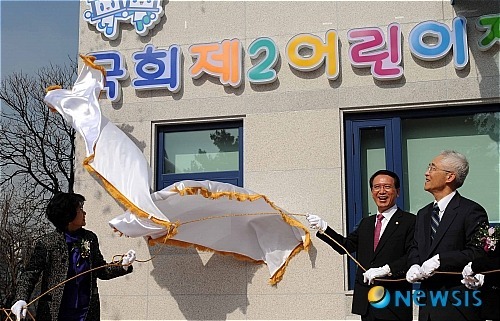
Opening Ceremony of the National Assembly’s second kindergarten
in 2010 (Picture: NEWSIS)

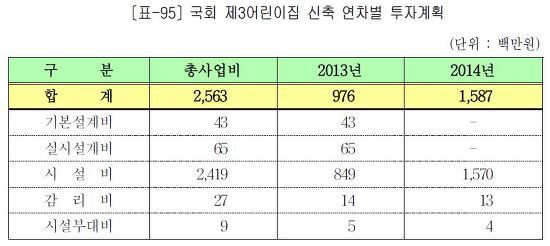
 The National Assembly has set budget for the construction of its
third kindergarten three years after its second kindergarten was constructed. The
plan is to build the third kindergarten by May 2014 with a total budget of 2.563
billion won. The reason behind is that the full capacity of its first and
second kindergarten is 290 while there are 260 on the waiting list.


  The new project of constructing a new National Assembly’s
Kindergarten sounds reasonable considering the 260 people who are on the list.
However, this only makes sense when the demand of national and public
kindergartens is not known.


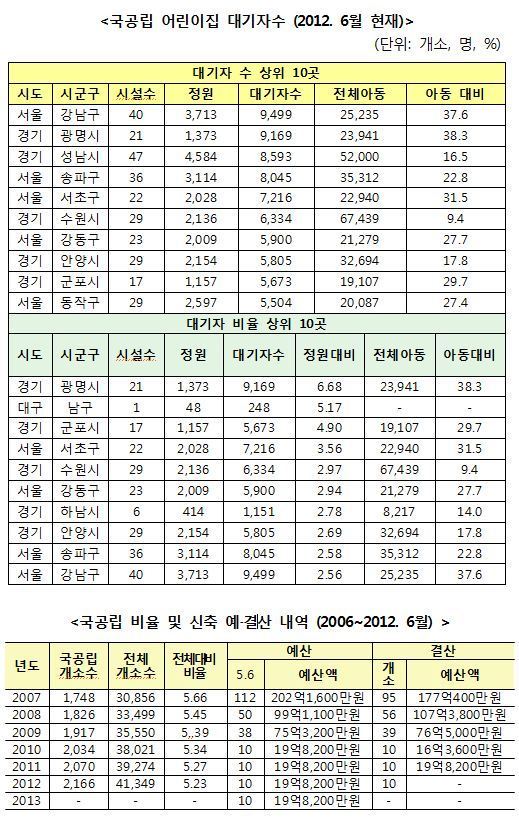
  According to the data “Waiting list of National and Public
Kindergartens” which Nam Yoon In Soon, a member of Democratic United Party and
Health and Welfare Committee at the National Assembly, gained from the Ministry
of Health and welfare, it is possible to see the short supply of national and
public kindergartens.


  The regions ranked on the top 10 concerning its long waiting
list have a capacity of 2500 kids while there are 7200 on the lists. Although
it differs a lot among cities, this means that the number of children on the
list is nearly 3 fold the quota. In comparison, the budget for constructing new
national and public kindergartens remained at 1.982 billion for the past 4
years. 2.6 billion won has been set for the National Assembly’s kindergarten
while the budget for national and public kindergartens of the Ministry of
Welfare and Health is less than 2 billion a year.


  Of course, the National Assembly’s idea of building an extra
kindergarten may be a good idea if it is necessary. However, in the current
condition where a country-wide short supply of national and public
kindergartens and the lack of budget are present, the third kindergarten of the
National Assembly which cost 2.6 billion won only seems to be a privilege for
parliamentary officials and aides from the perspective of citizens.


국회제3어린이집예산(국회운영위원회예비심사보고서).pdf


by
  • 정보공개센터

정보공개센터는 정부지원 0%, 시민의 후원으로 활동합니다

후원하기
활동소식

Use of Active X in local governments

2013.01.07

By
Kang Min Seong, a student at Chung Ang University. Thank you for sharing this
with us.


Translated
by Jiyoung Shin


  Ahn
Cheol-soo, a former presidential candidate, suggested the “abolition of
government initiated authentication certificates” as one of his election
pledges in the field of Information and Technology. Its main issue is the abolition of the Active X authentication
system and allowance of industries’ autonomy in selecting the types of authentication
and security programs.


  Due
to Ahn, other issues related to Active X have been brought forth to the
surface. After requesting relevant information, it was found that still a high
number of local governments websites is using Active X.


  Active
X is a library that Microsoft (MS) established in order to expand their
Internet Explorer (IE). This technology enables to install programs that can be
operated in the browser using web-browser. However, since the installed program
has access to every resource within the system and can even update system files,
it has a high potential of bringing in various types of viruses and backdoors.
MS has stopped supporting this system due to increasing complaints about
its inconvenience and danger.


  Although
Korea has a reputation as an IT
 power house, the domestic web environment seems
to be regressing from the global standard. Currently, Chrome, a new web-browser
of Google is encroaching on the global market and other web-browsers such as
Safari and Firefox are also increasing their market shares in the world. Even
MS has long been neglecting the IE’s library, Active X. Of course, the number
of IE users in Korea is also on decrease. But still the majority of websites
are established for IE.


  Korea
Communications Commission (KCC) and the Ministry of Public Administration and
Security (MOPAS) enacted (second amendment) <E-government Compatibility
Guideline> to enhance the competitiveness of web service and internet users’ convenience.
Ensuring the compatibility of web browsers is clearly stated there.


  The
article 4 of the guideline states that “when there is no restriction on
technologies, the service should be equally provided on more than 3 different
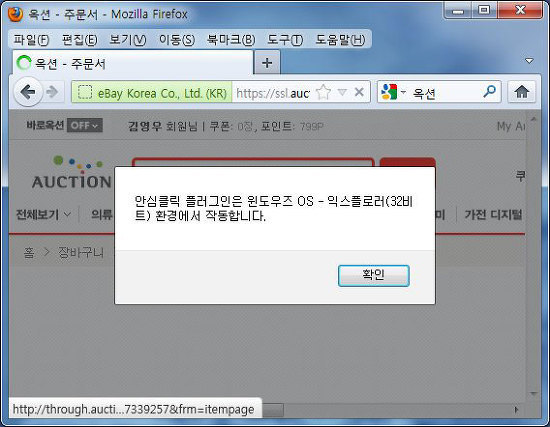
types of web browsers”. However, the service is not compatible with other web
browsers when Active X, which is only provided by IE, is used in establishing,
improving and operating websites.


  Websites
of local governments also showed a rather high rate of Active X usage. After
requesting information concerning internet browsers when using websites (Institutions
that are not available –partly or entirely- without installing Active X), the
majority of the institutions showed a lack of related information. In addition,
some websites that have limited access with browsers other than IE were marked
as “entirely available”. (There were some institutions that only started
offering explanations when I pointed out the limited access to the content.)
Having requested the information to 16 institutions (Seoul, 6 Metropolitan
cities, 9 provinces), only 5 (Seoul, Gyeonggi, Daejeon, Busan, Jeju) provided
the information including the websites of their affiliated organizations. Below
you can find whether these five institutions use Active X or not and their
usage rate
.


□ Use of Active X among 5 Local governments including their affiliated
organizations


Seoul

Gyeonggi

Daejeon

Busan

Jeju

Without Active X  -Websites partly/entirely not available

15

60

3

3

2

Without Active X – Websites Available

19

159

7

55

8

Total

34

219

10

58

10


□ Use of Active X among local
governments that partly provided information


Gangwon

Gyeongsang

buk-do

Chungcheong

nam-do

Incheon-si


Bupyeong-gu

Incheon-si Ganghwa-gun

Incheon-si Gyeyang-gu

Problem

Zoom in/ out not available
with Chrome,

Firefox


(Inc. Cyber Gangwon
Tourism)

I-Life
information service


Web-Gis

3D
living space information system

Menus for reservation


– Venue rental
application,


Tennis court application

Limited
access
  in 7 of 22 affiliated
organizations

Reservation and
application


Is Active X really necessary?


  One thing to notice is whether Active
X is really effective for the security and authentication. According to the
“Internet browser user survey” by OPENWEB, 1 out of 2 people experienced
computer viruses after installing Active X. Furthermore, more than 70% of the
respondents replied that they are concerned about the virus infection from Active
X.


  Active X has a high potential
to be used as a pathway to distribute malignant code. Due to this, KCC
recommends not to use it. However, under the current domestic web environment,
the websites of local governments and their affiliated organizations, online
payment and banking are heavily restricted without installing Active X. Below
you can find the related information.


강민성,20082909,01042885022_정보공개청구_자료.zip


by
  • 정보공개센터

정보공개센터는 정부지원 0%, 시민의 후원으로 활동합니다

후원하기